Opening Remarks
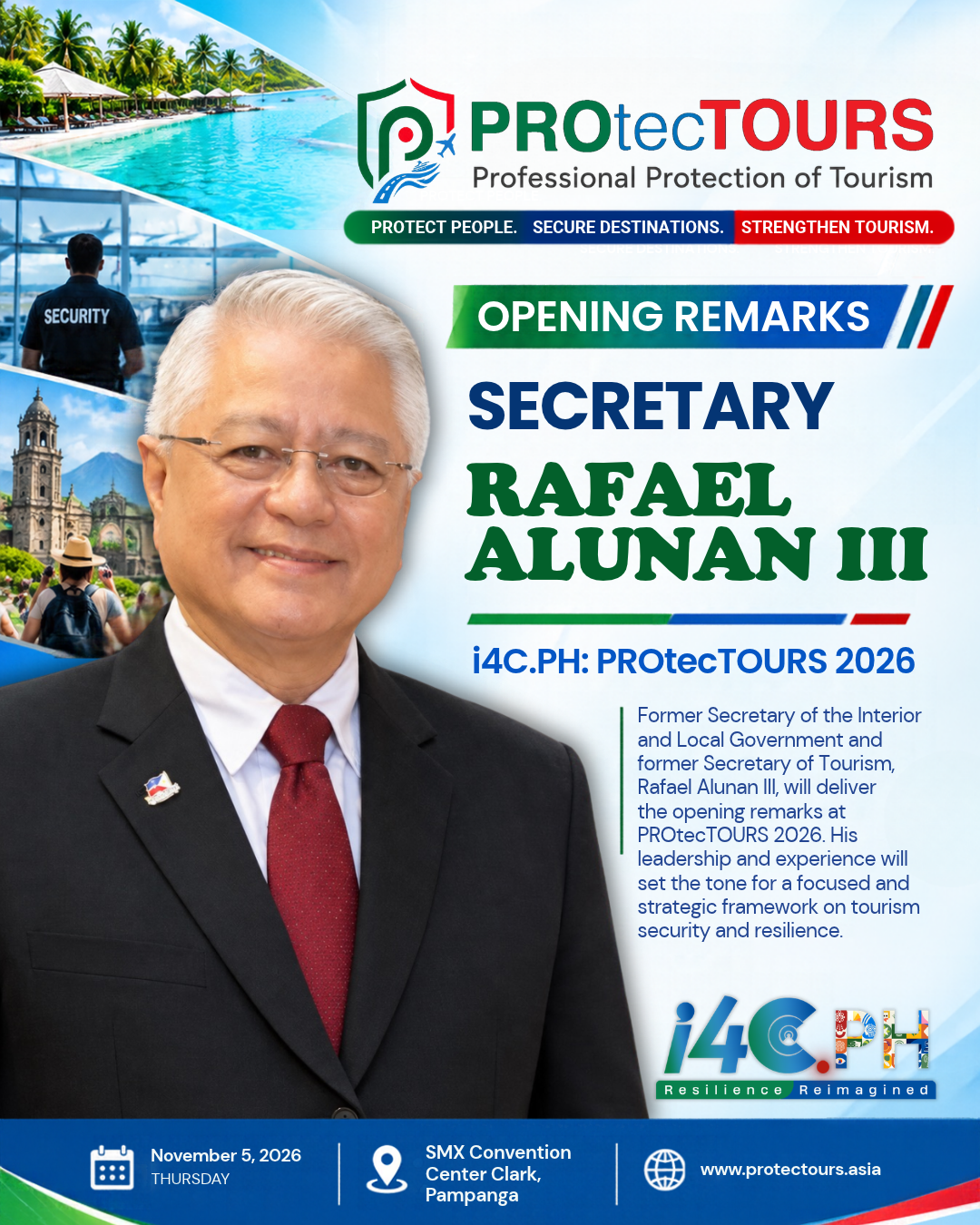
Rafael Alunan III
Former Secretary of the Interior and Local Government and former Secretary of Tourism

Former Secretary of the Interior and Local Government and former Secretary of Tourism
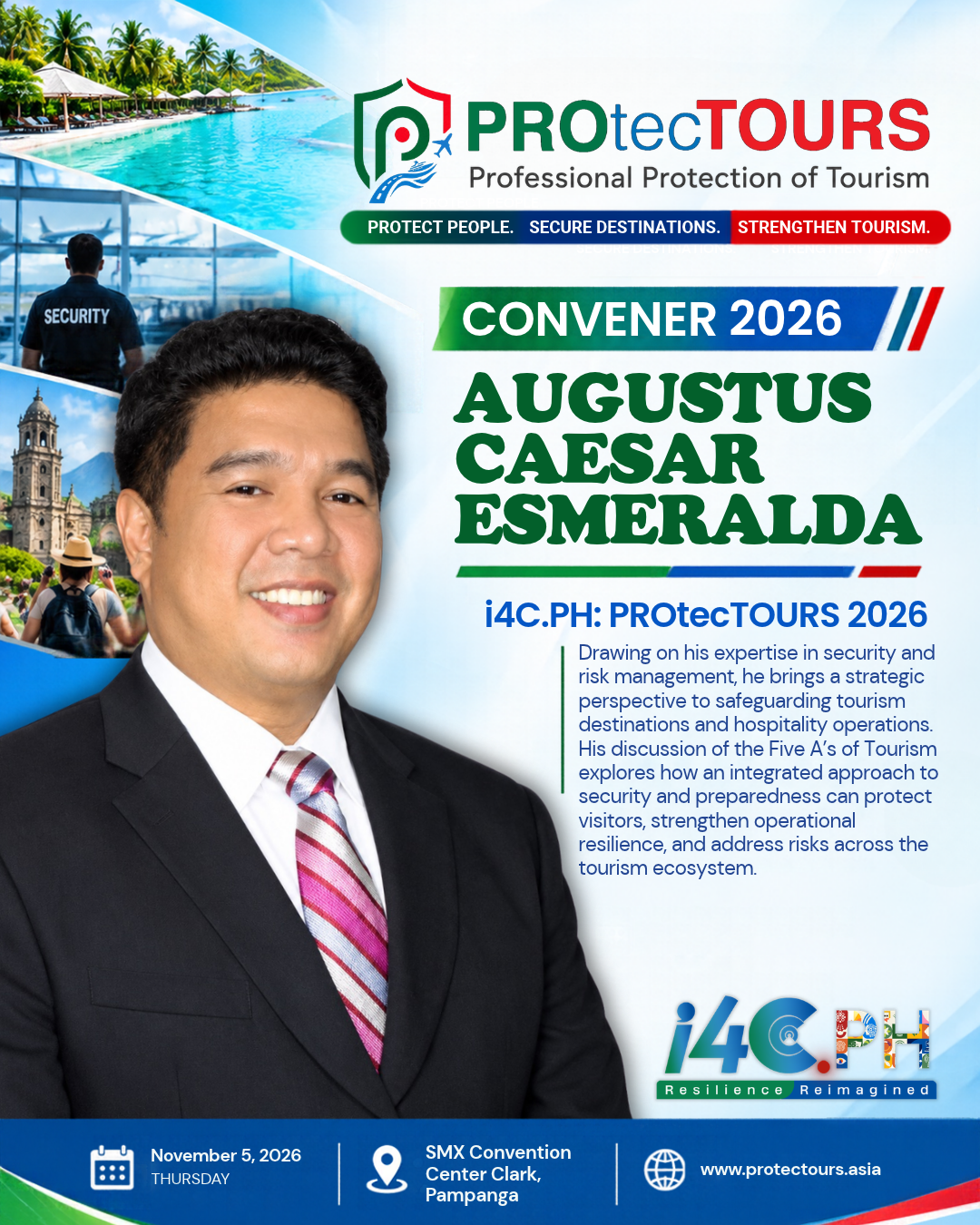
Security and Risk Management
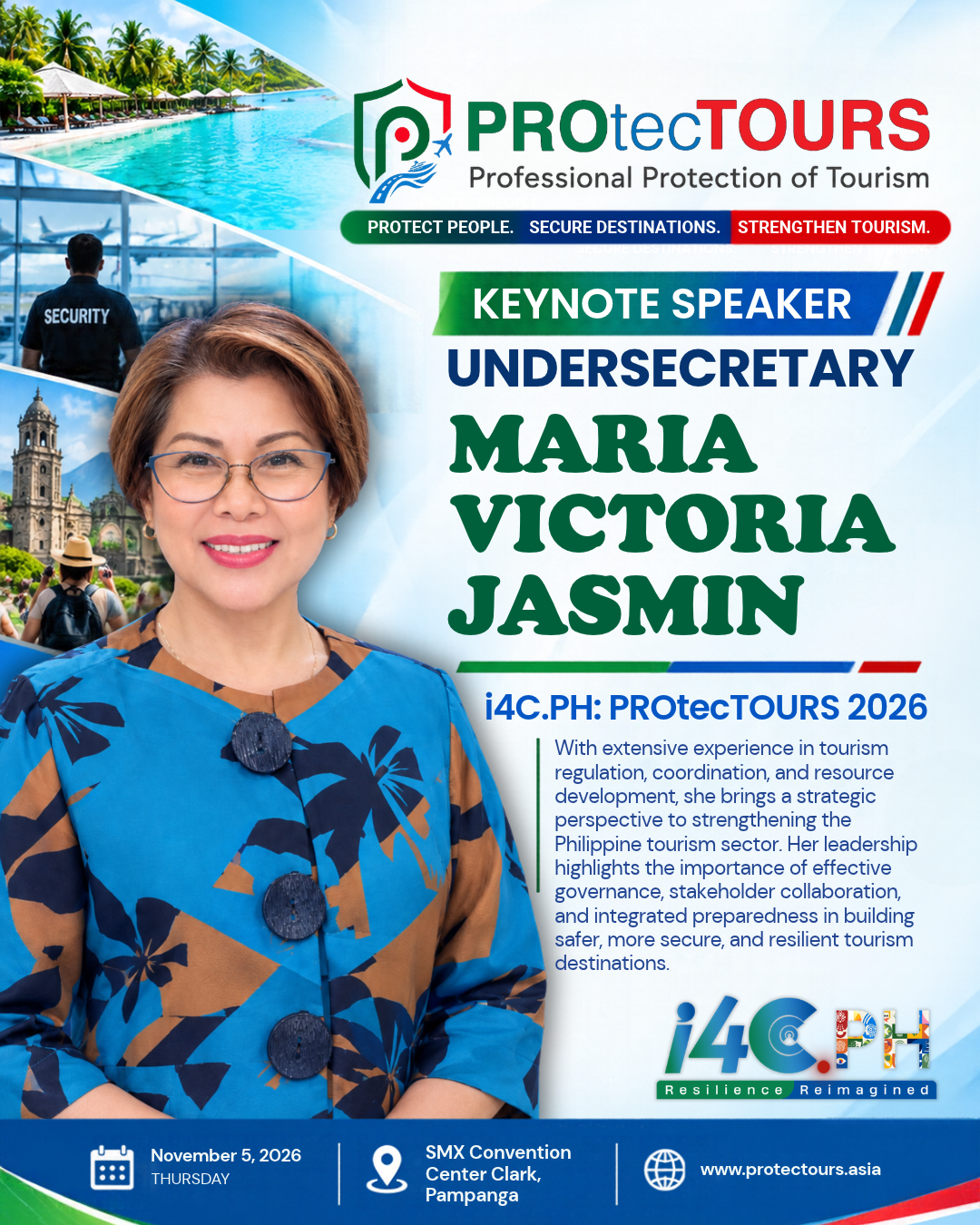
Undersecretary
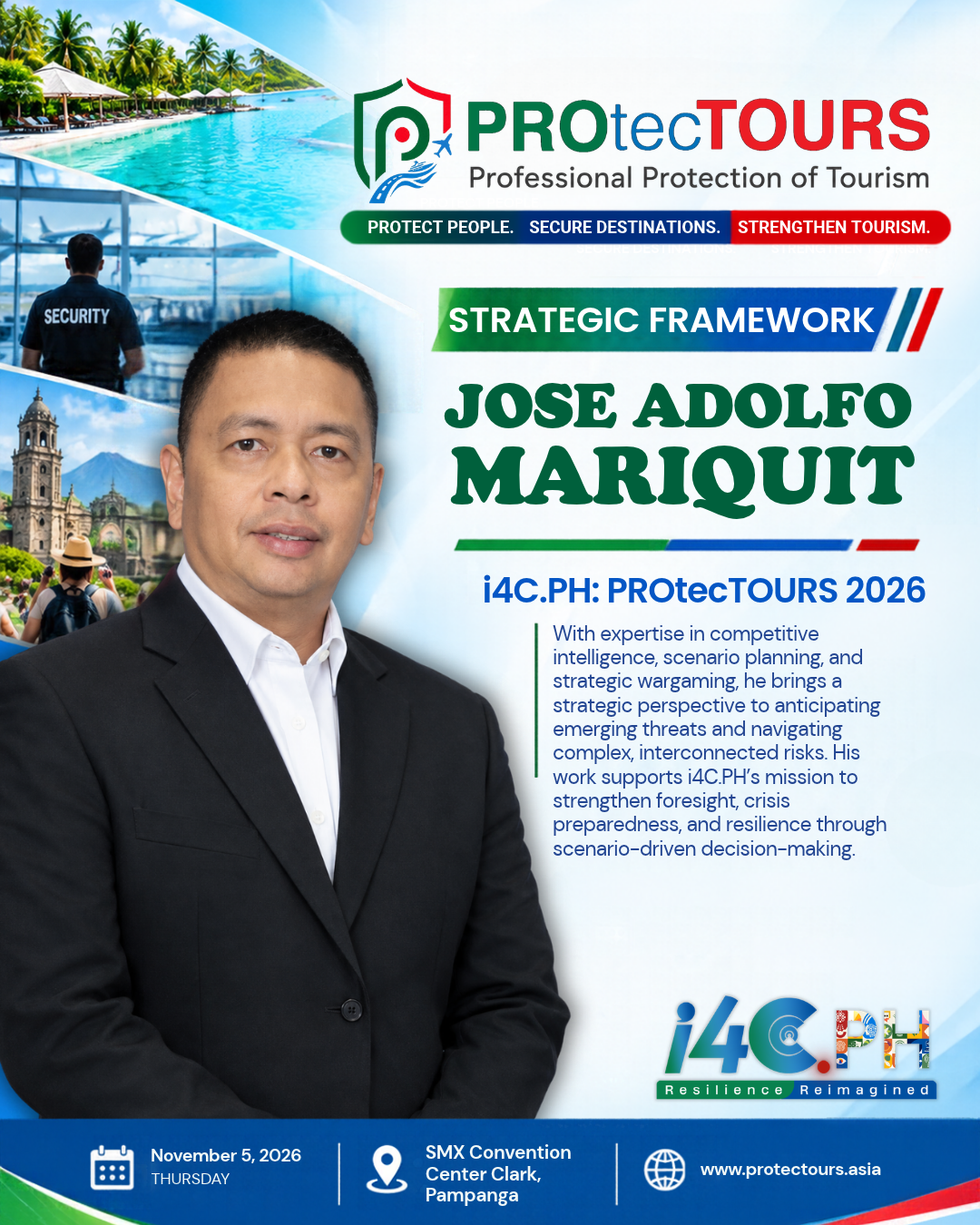
Strategic Framework


Tourism is a vital contributor to the Philippines’ economic growth, local development, and global competitiveness. The Department of Tourism (DOT), as the national government agency responsible for developing and promoting Philippine tourism, plays a central role in advancing a tourism industry that is sustainable, inclusive, and competitive. Yet destinations can only thrive when the people, businesses, communities, and systems that support tourism are prepared to withstand disruption and respond effectively to emerging risks.
PROtecTOURS recognizes that tourism protection extends beyond promoting destinations. It brings together tourism and hospitality leaders, government stakeholders, security and safety professionals, educators, technology providers, and future tourism professionals to strengthen awareness, preparedness, coordination, and resilience across the tourism ecosystem.
Through knowledge-sharing, practical discussions, and industry collaboration, PROtecTOURS aims to contribute to a safer, more secure, and more resilient Philippine tourism industry.
Because a destination’s competitiveness is not measured only by how attractive it is, but also by how confidently people can arrive, stay, experience, and return safely.










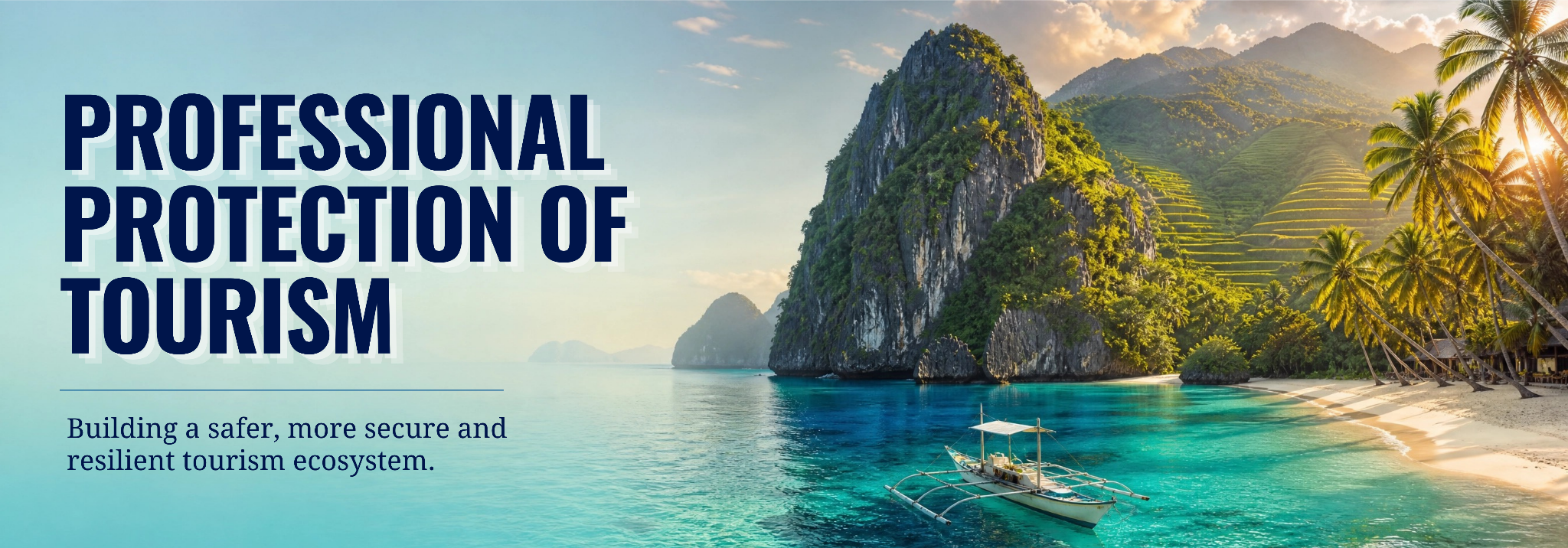
PROtecTOURS is a professional platform dedicated to advancing tourism security, safety, preparedness, and resilience by connecting the sectors that shape, operate, protect, and support tourism.
It recognizes that protecting tourism cannot be the responsibility of one organization, one department, or one profession.
PROtecTOURS creates opportunities for people and organizations across the tourism ecosystem to learn, connect, discover, prepare, and collaborate.

Gain practical insights from industry experts.
Meet leaders and professionals across the tourism ecosystem.

Explore technologies, innovations, and practical solutions.

Identify risks and strengthen organizational readiness.
Build relationships and partnerships beyond the event.
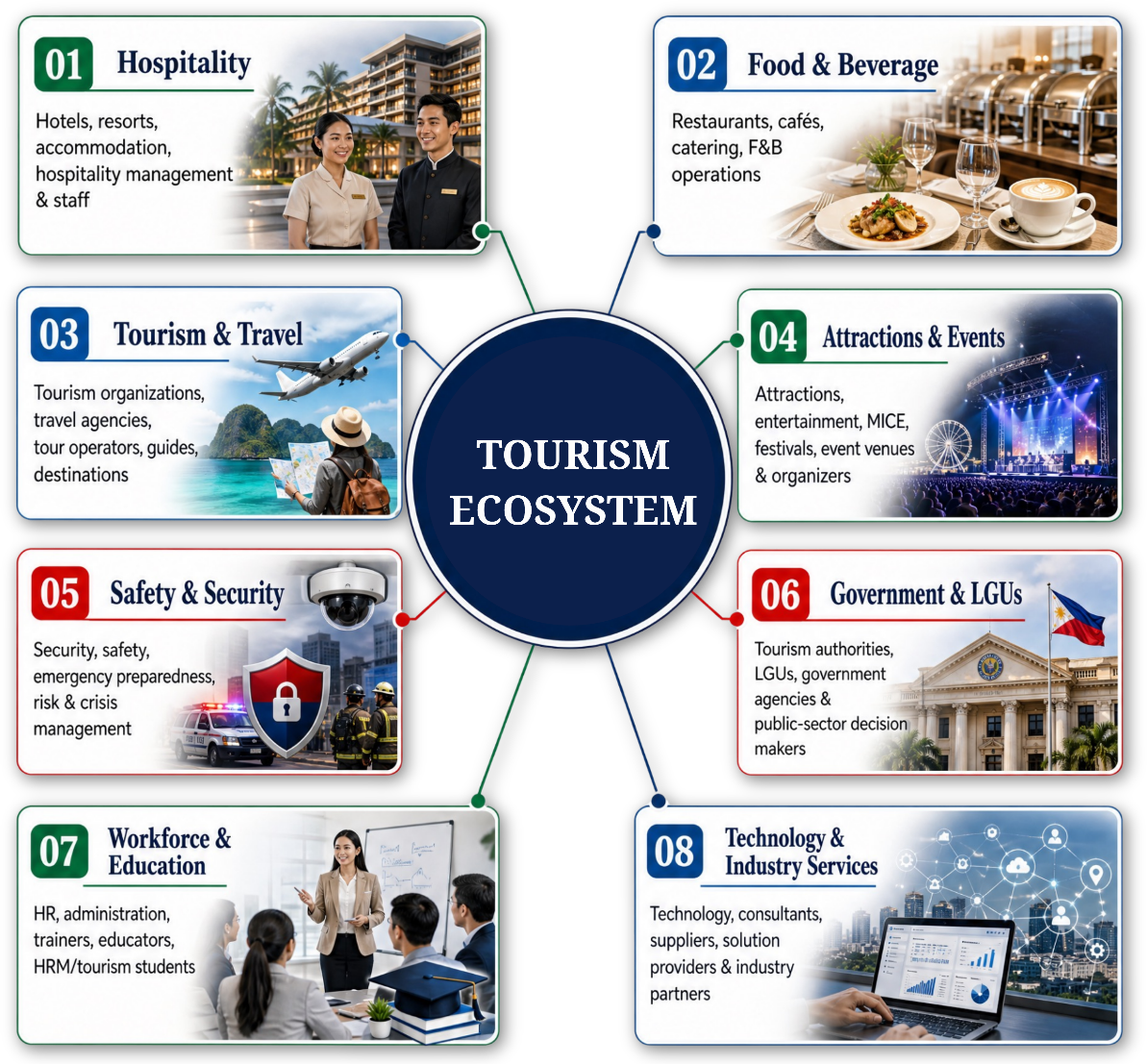
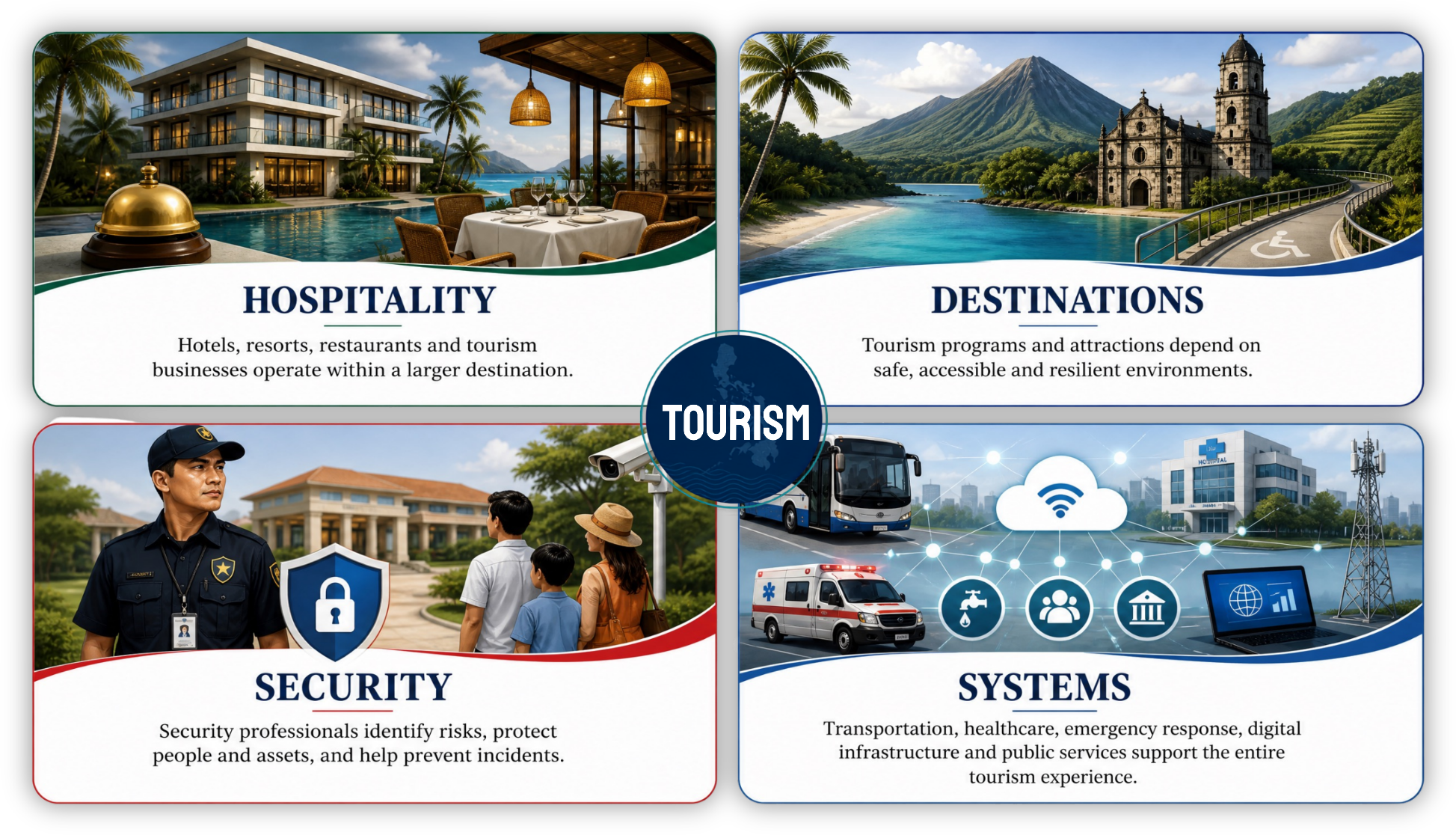
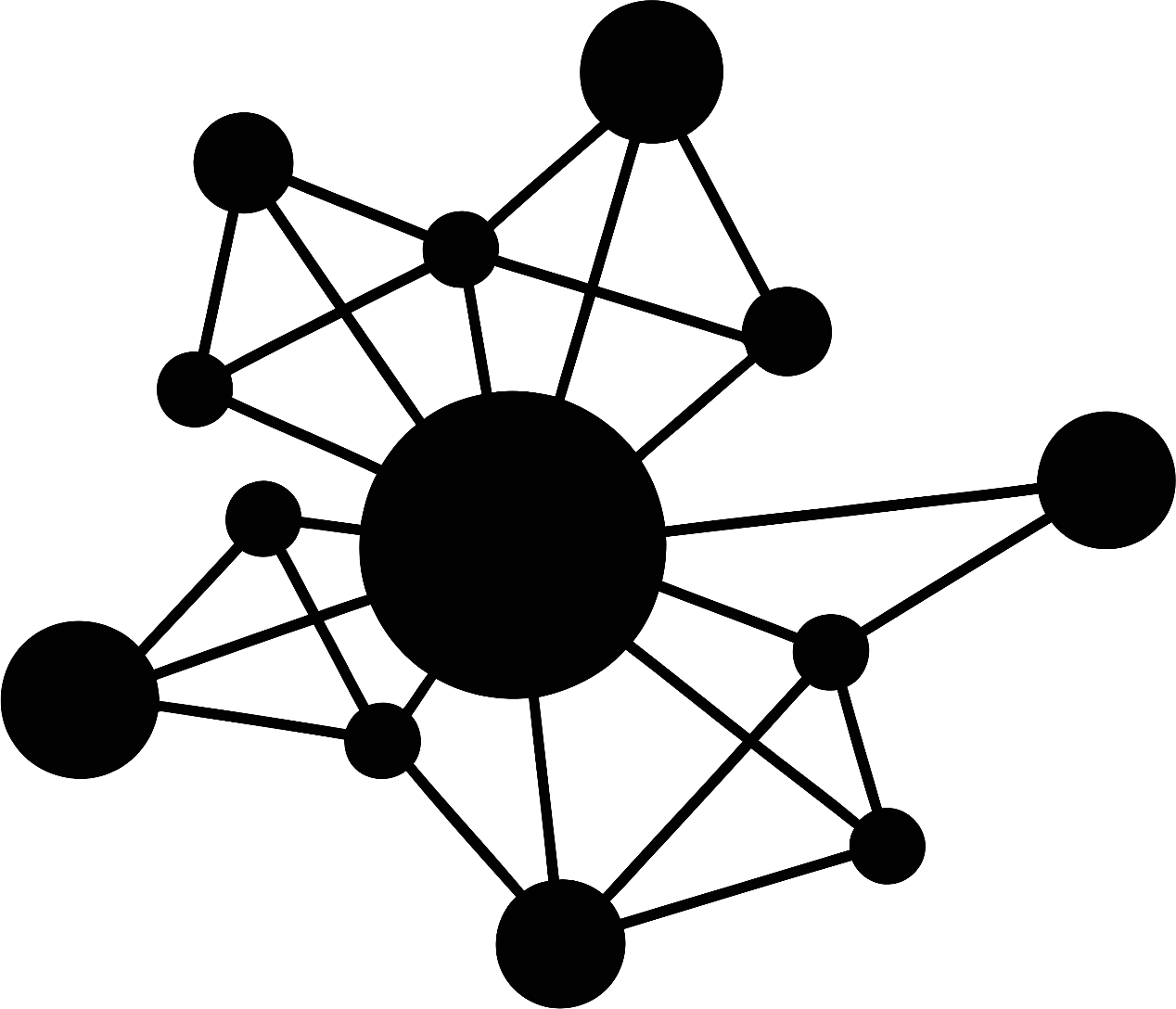
Tourism is strengthened by an interconnected ecosystem of people, organizations, destinations, systems, and services. By bringing together hospitality and food-and-beverage businesses, travel and tourism professionals, attractions and events, security and safety experts, government and local authorities, educators and workforce leaders, and technology and industry partners, we help build tourism that is safer, more secure, and more resilient.
When these sectors work together, they can share knowledge, coordinate capabilities, identify risks, respond to disruptions, and create better experiences for visitors, communities, and tourism workers.
Connecting the tourism ecosystem to protect people, secure destinations, and strengthen tourism.

To help build a tourism ecosystem where safety and security are integral to the visitor experience, organizational readiness, and destination resilience.

A Philippine tourism industry where people can arrive, stay, experience, and return with confidence.

Protect People.
Secure Destinations.
Strengthen Tourism.
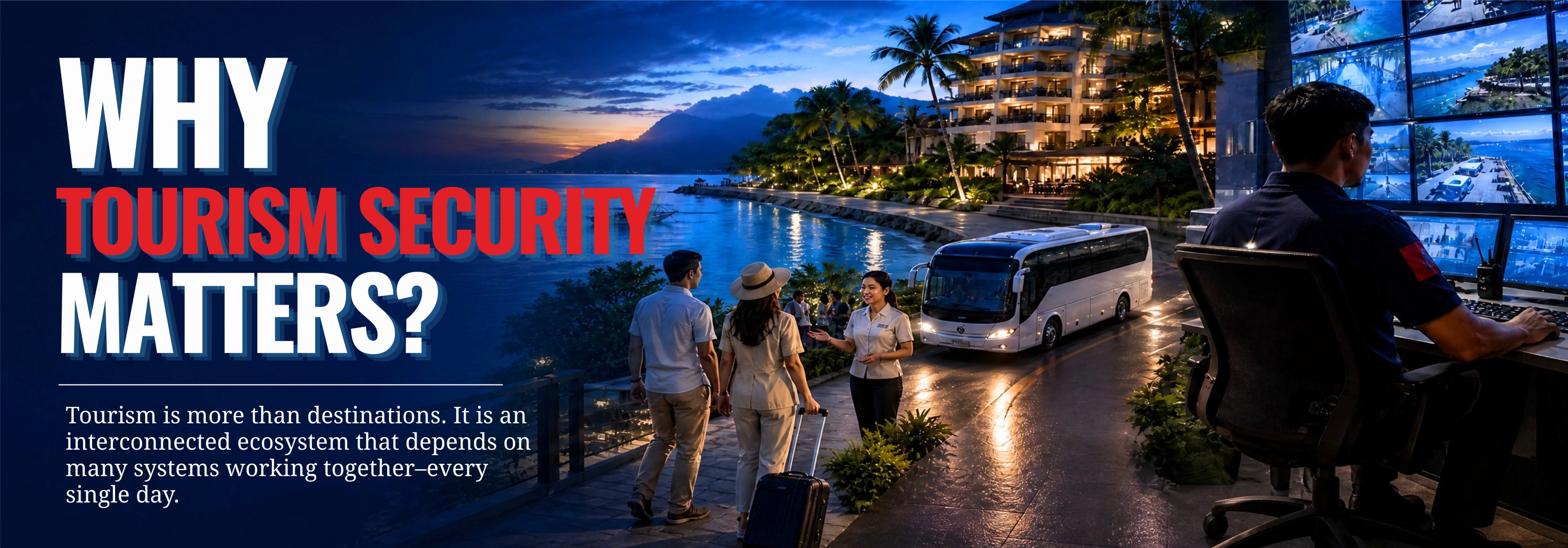
Tourism depends on a network of systems that visitors may never see but experience every day.
It gets people there.
gives them a place to stay.
create experiences.
support reservations and payments.
keep businesses operating.
provide assistance when something goes wrong.
help coordinate the broader environment.
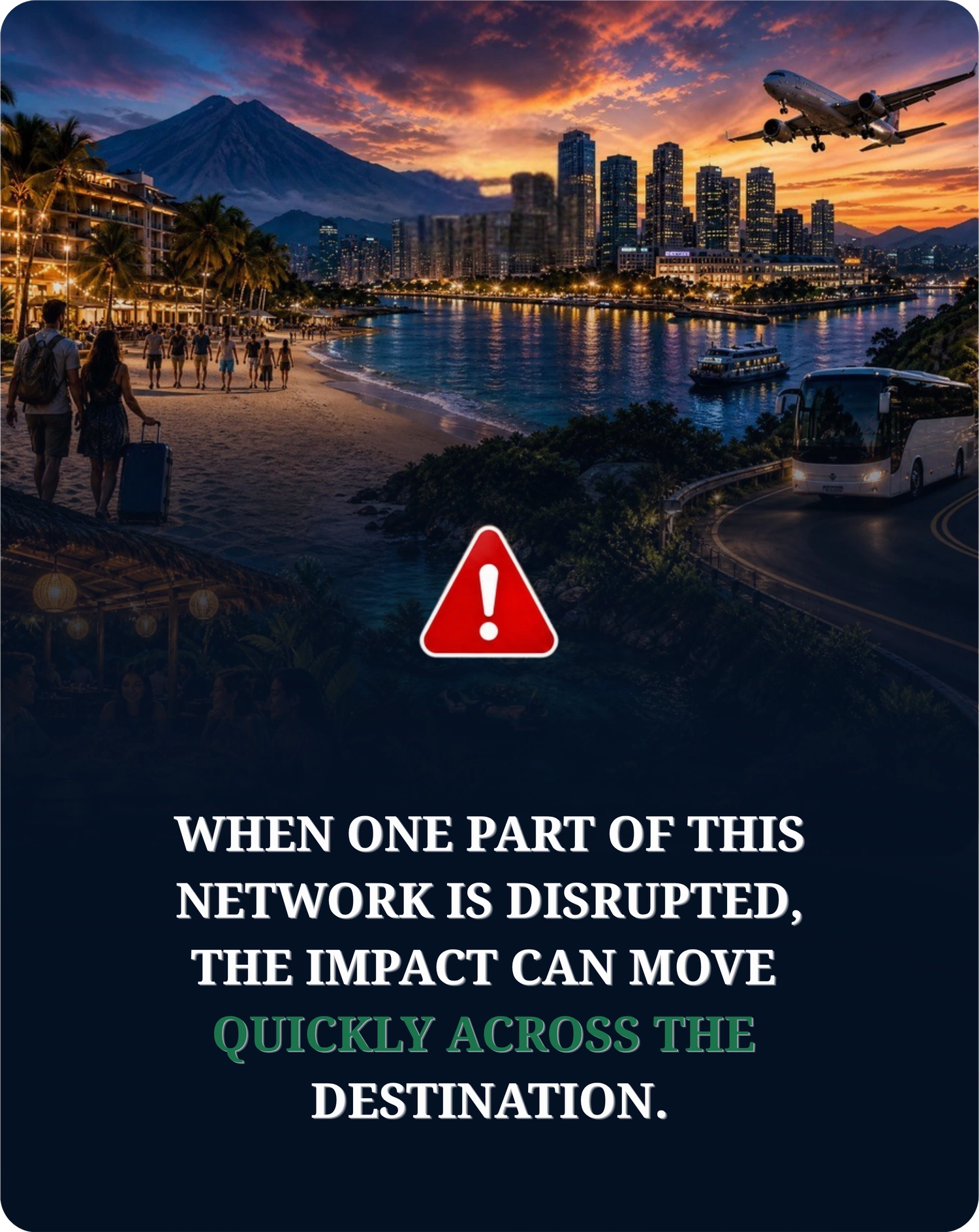
A safety incident can affect a visitor confidence.
A cyberattack can disrupt reservations and guest information.
A natural hazard can disrupt transportation and destination access.
An emergency can affect guests, employees, and operations.
A crisis can affect not only the establishment involved, but the reputation of the establishment.
This is why tourism protection needs to be viewed beyond individual establishments.


The key actions that transform organizational awareness into operational readiness, enabling effective preparation, response, and recovery.
Mapping emerging threats and persistent tourism risks.
Identify vulnerabilities across tourism operations and destinations.
Apply learning through scenarios, demonstrations, and practical sessions.
Bring tourism, government, security, safety, and technology stakeholders together.
Translate learning into organizational and destination-level action.
A destination’s competitiveness is influenced not only by how attractive it is, but by how confidently people can experience it.
That means tourism security can contribute to:

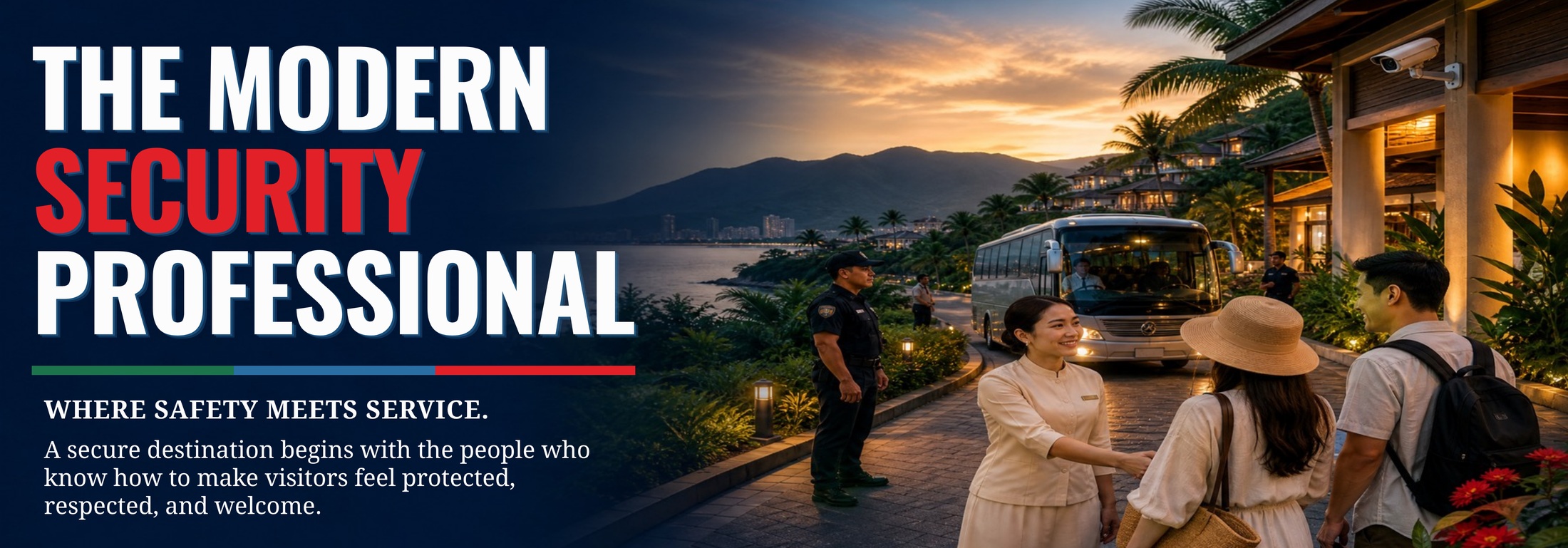
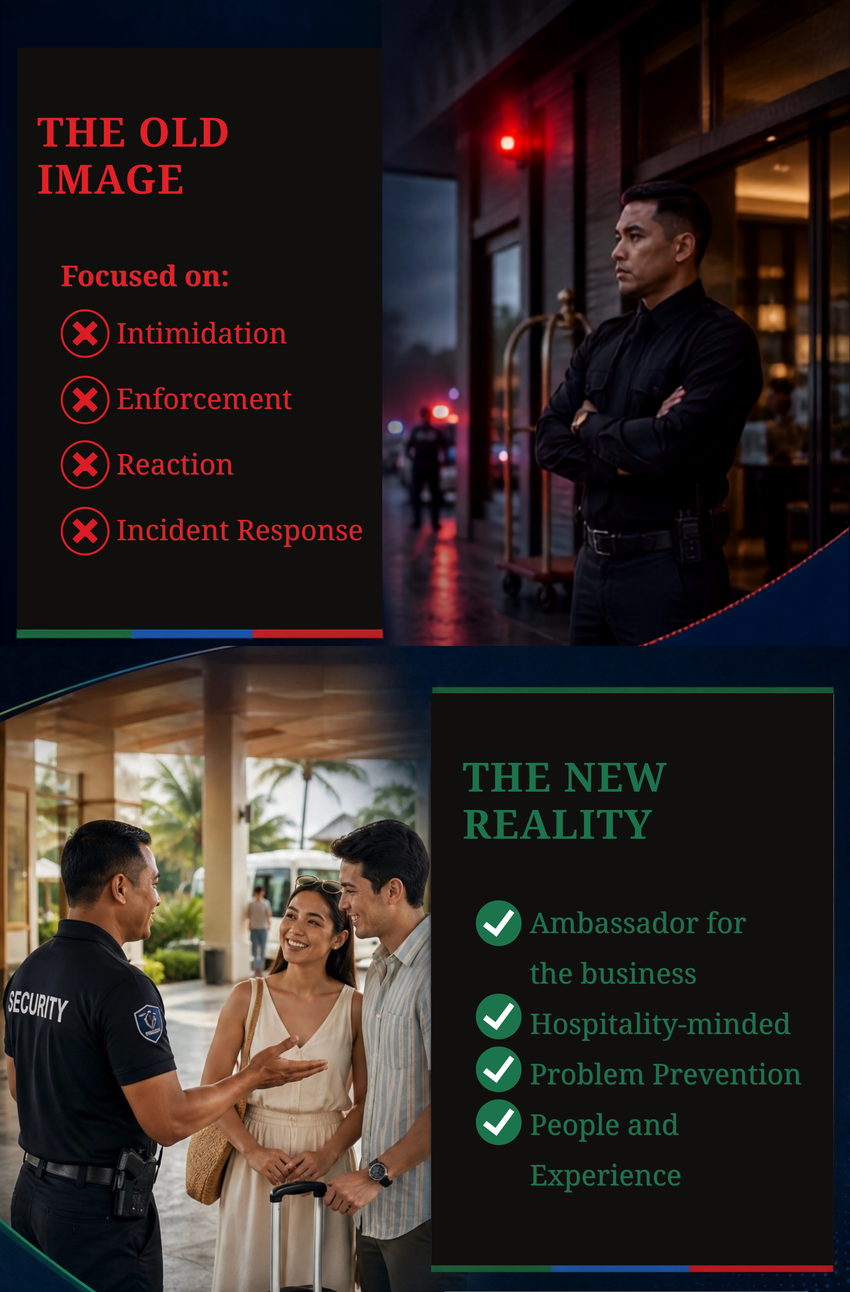
The roles of a security professional has evolved. We are moving from a culture of reaction to a culture of prevention, service, and partnership.
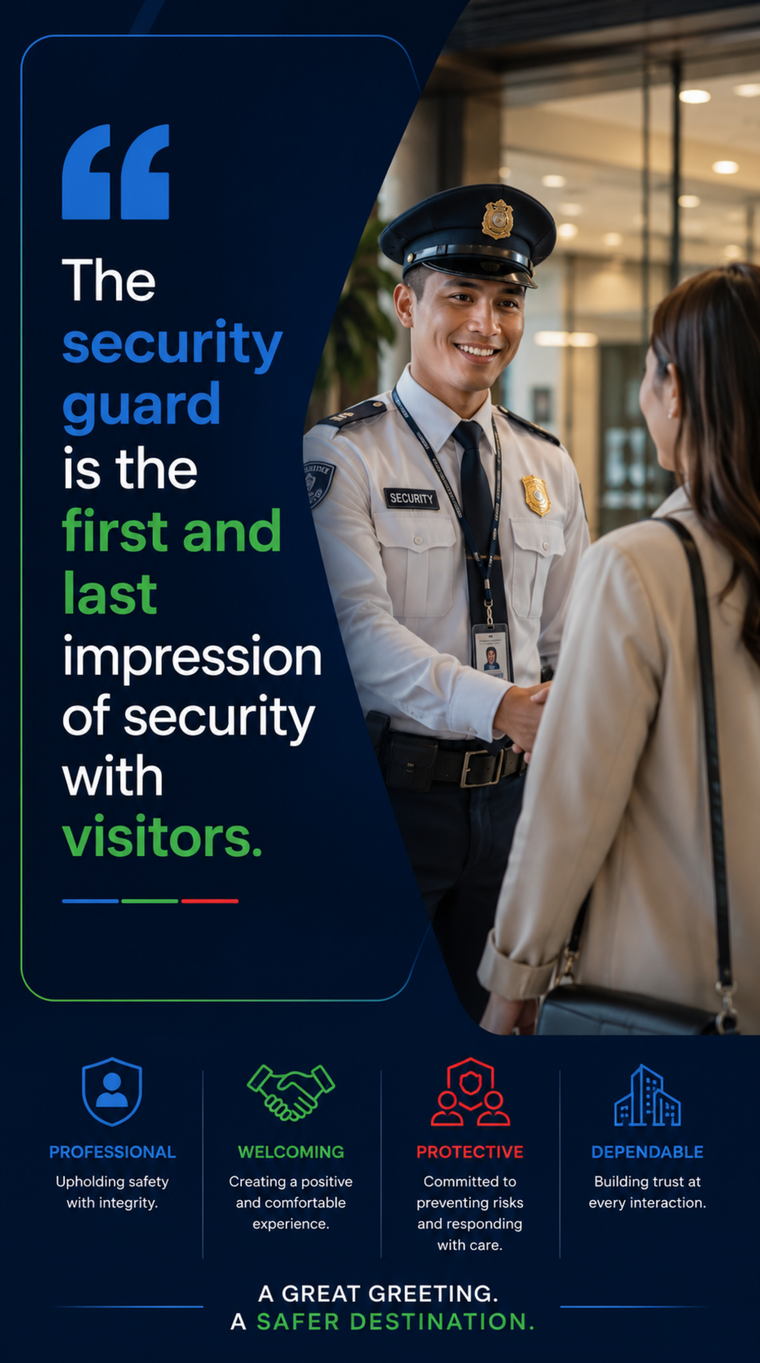
Exceptional customer service is not separate from security—it strengthens it. A friendly attitude, willingness to help, and a professional approach create a safer environment for everyone.
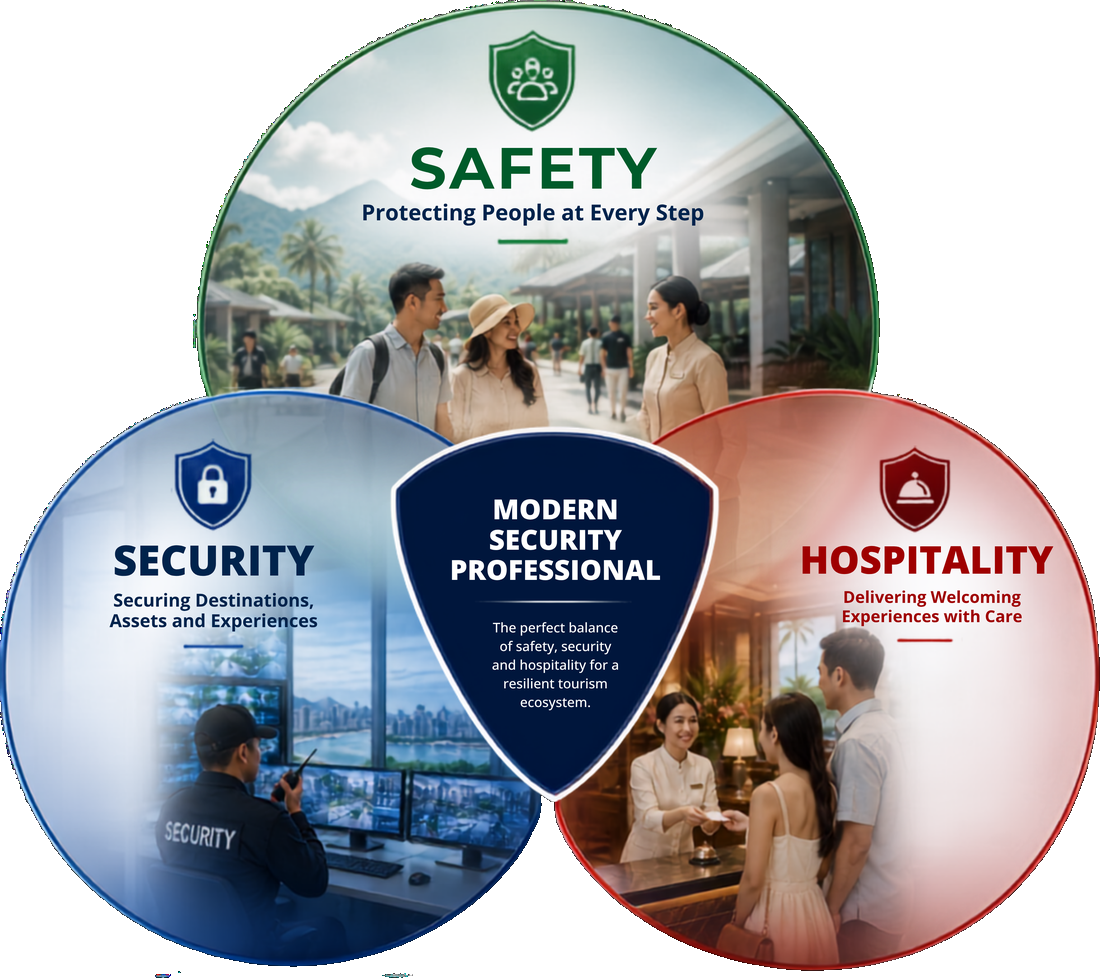

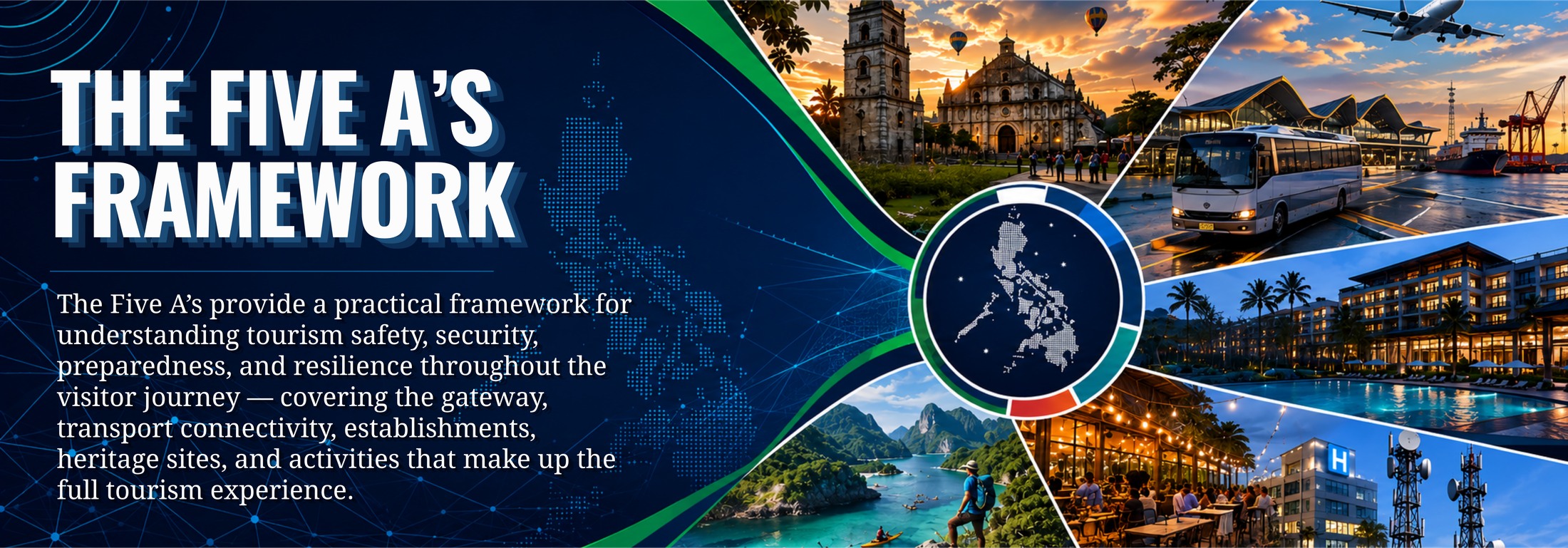
PROtecTOURS uses the Five A’s as an integrated way of looking at protection throughout the visitor journey.
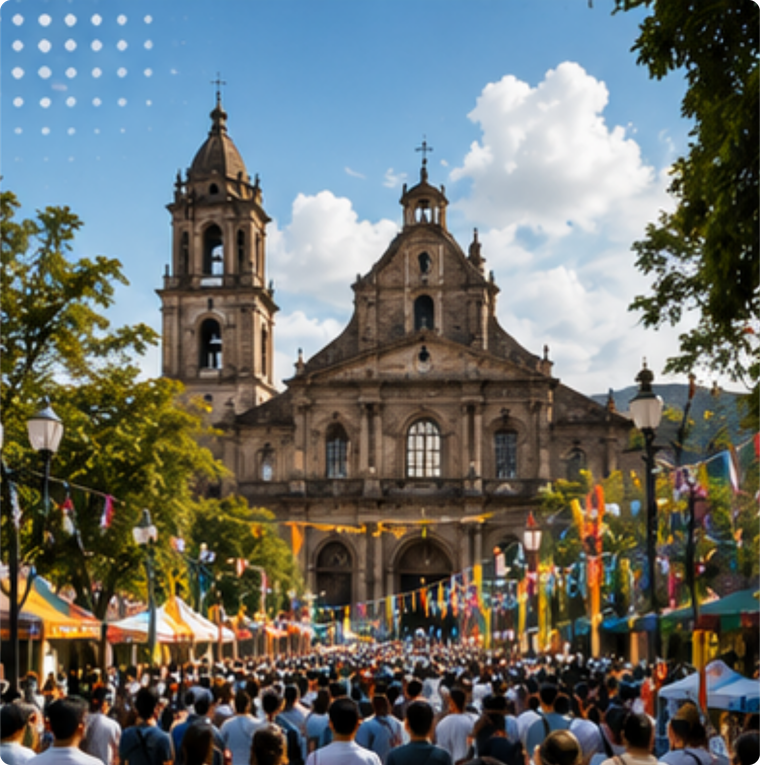
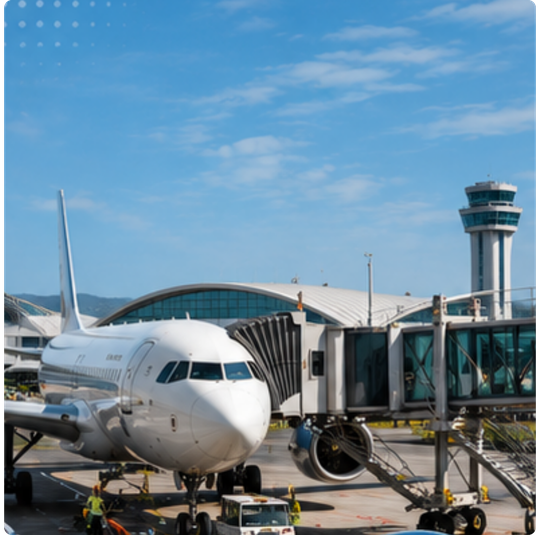
Places people come to see.
Protection considerations:
crowds, soft targets, public safety, emergency response, security operations, events and festivals.
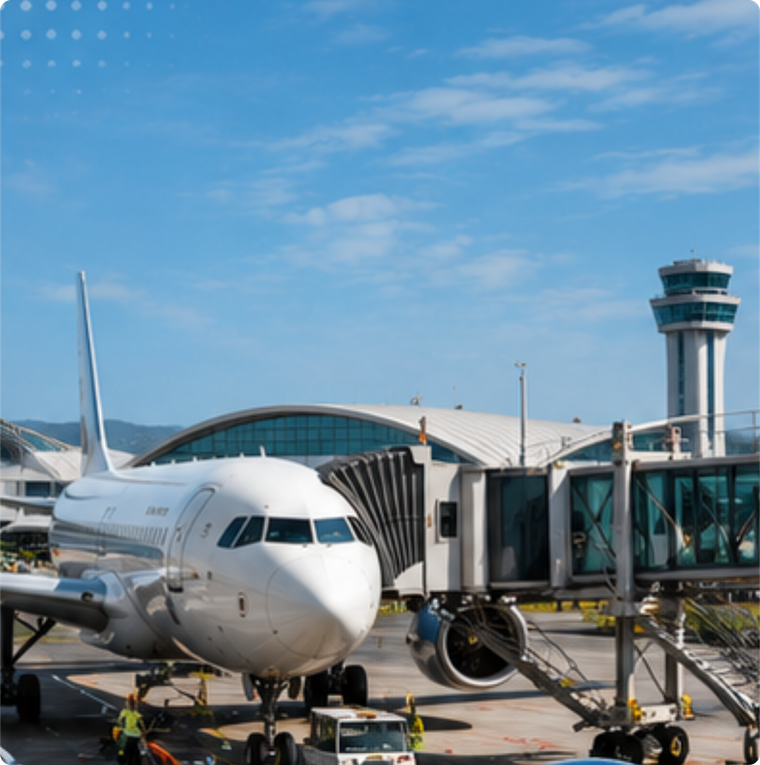
How people get there and move around.
Protection considerations:
airports, ports, roads, transfers, public transport, last-mile movement and transport security.

Where guests stay and operators earn.
Protection considerations:
guest safety, physical security, fire and life safety, workplace safety, emergency preparedness, business continuity.
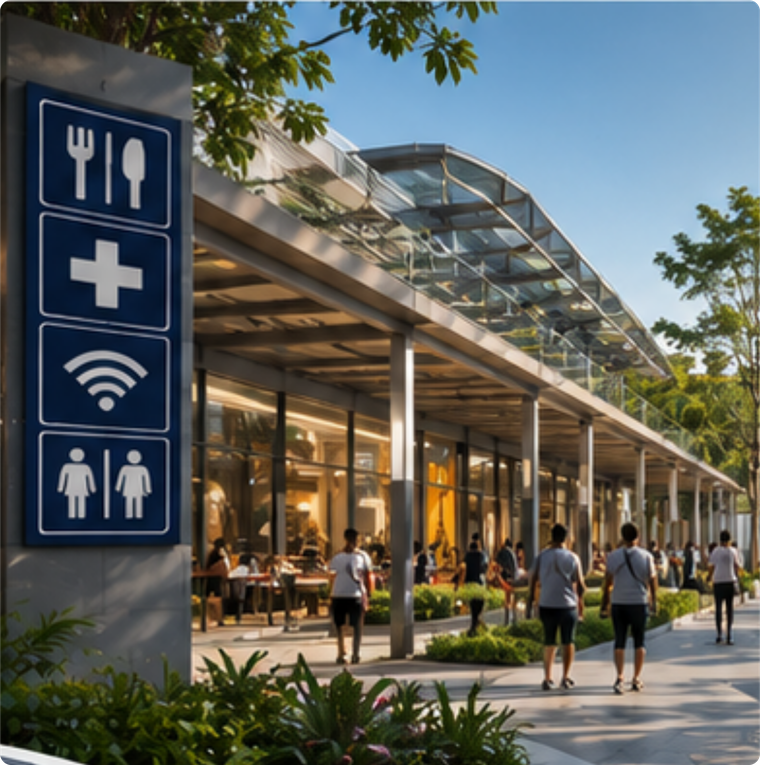
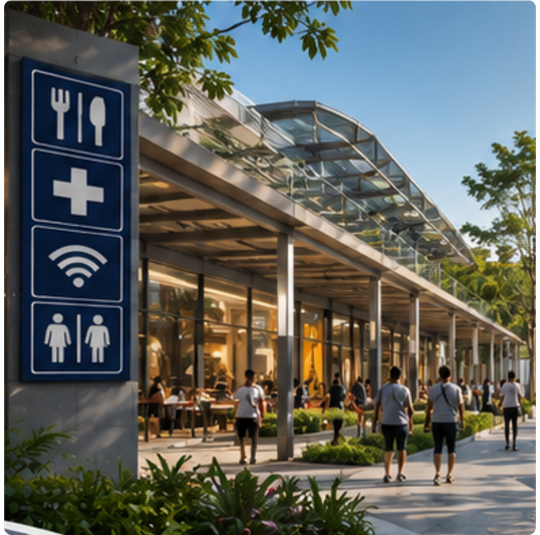
Services and supporting spaces.
Protection considerations:
food, health, utilities, public-adjacent areas, communications and supporting infrastructure.
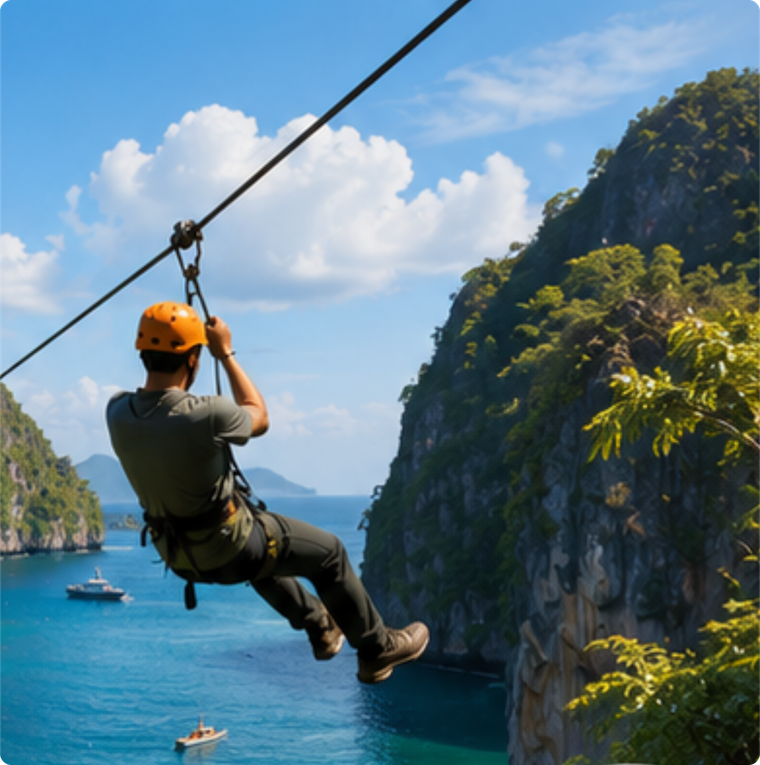
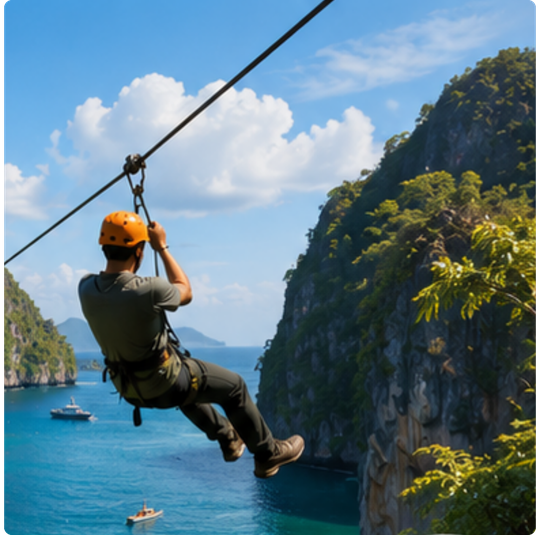
Experiences visitors participate in.
Protection considerations:
adventure activities, tours, events, outdoor risks, operators, guides and emergency response.
Tourism Security is not only about what happens during an emergency. It is also about what visitors feel before an emergency ever happens.

These things contribute to something tourism depends upon:
TrustVisitors need to trust that the destination is prepared to look after them.
Businesses need to trust their people and systems.
Employees need to trust their workplace.
Destinations need to maintain public confidence.
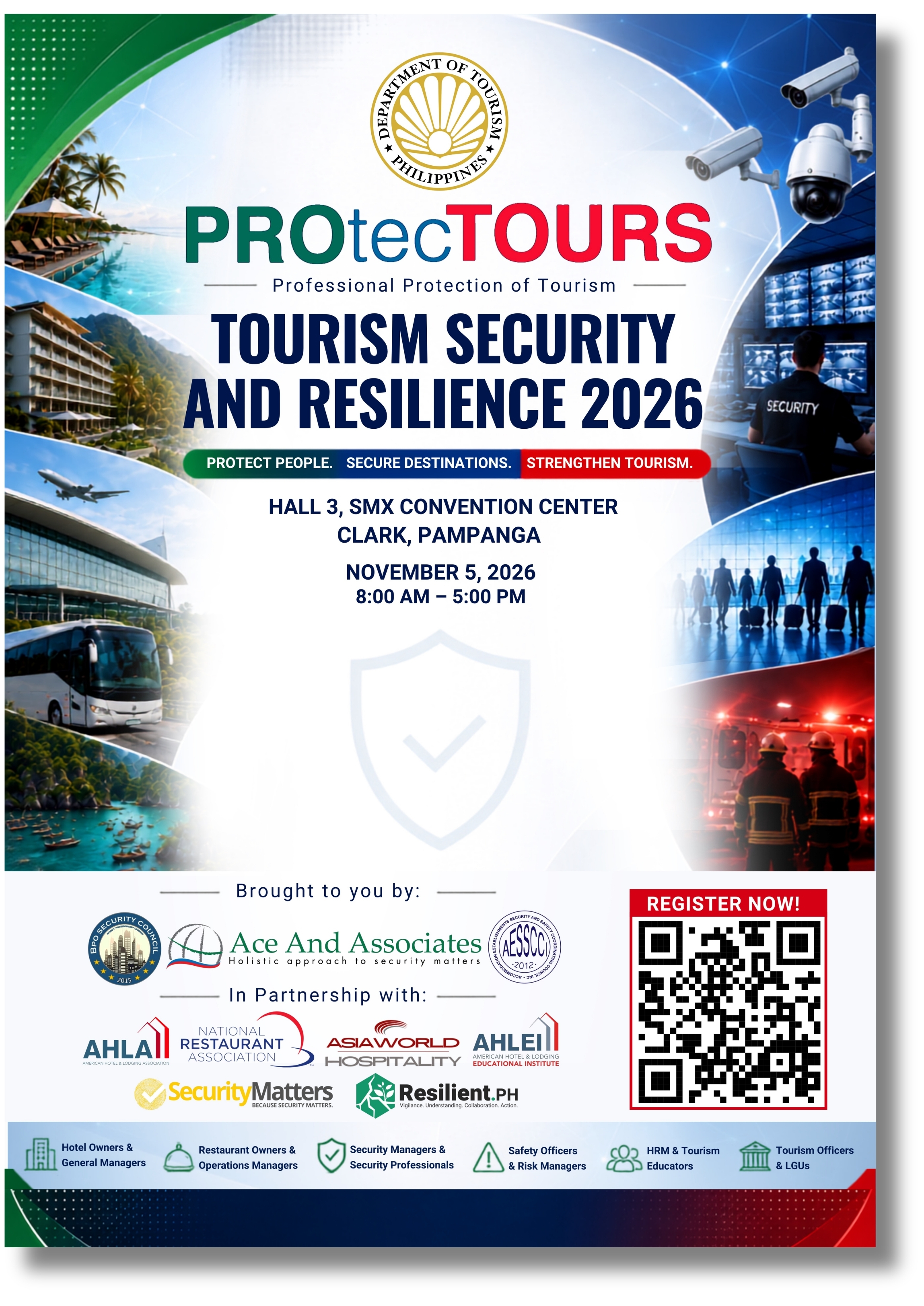
A tourist doesn’t experience security by agency or hotel. They experience one journey. That’s the Five A’s: Attractions, Accessibility, Accommodation, Amenities, Activities. Protecting tourism means protecting the whole chain. What happens when weather, transport, and communications fail at the same time? Learn how Philippine tourism stays safe and resilient when disruption hits.
Discover what it takes to build safer, more secure, and more resilient tourism on November 5 at SMX Clark at PROtecTOURS 2026.
Register NowPROtecTOURS brings together tourism stakeholders, safety and security professionals, government, industry partners, and destination leaders through recurring events focused on practical preparedness, risk reduction, and resilience.
Each edition responds to emerging challenges facing tourism while continuing the same commitment: protecting people, securing destinations, and strengthening tourism.

Industry discussions, expert insights, and strategic conversations on emerging tourism risks.

Practical learning designed to strengthen organizational readiness and response capabilities.

Networking, demonstrations, partnerships, and collaborative initiatives connecting the tourism ecosystem.
Have a question, partnership idea, event inquiry, or solution to share? Connect with PROtecTOURS and help strengthen a safer, more secure, and more resilient tourism ecosystem.
Send an Inquiry →Connecting with the organizations, industries, and professionals that help protect people, secure destinations, and strengthen tourism.







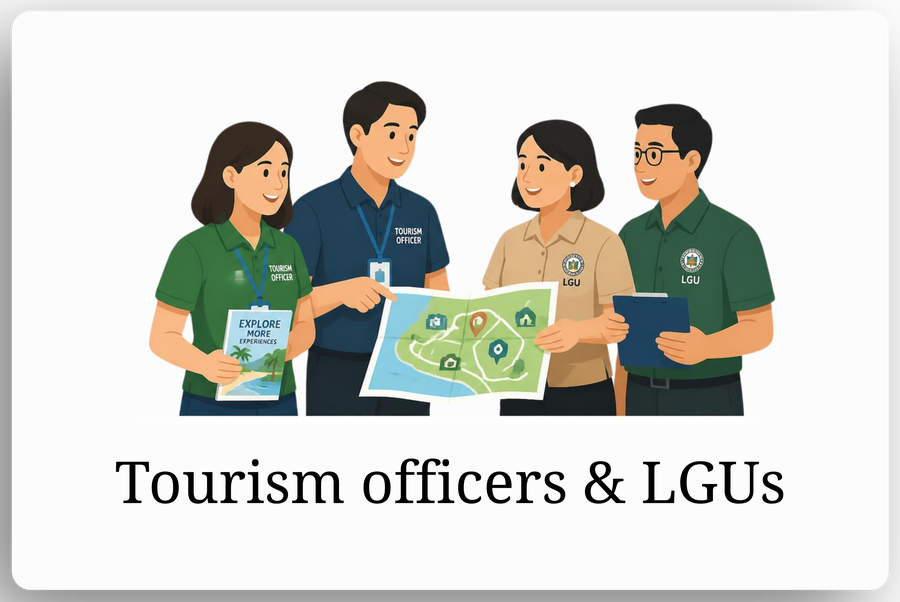
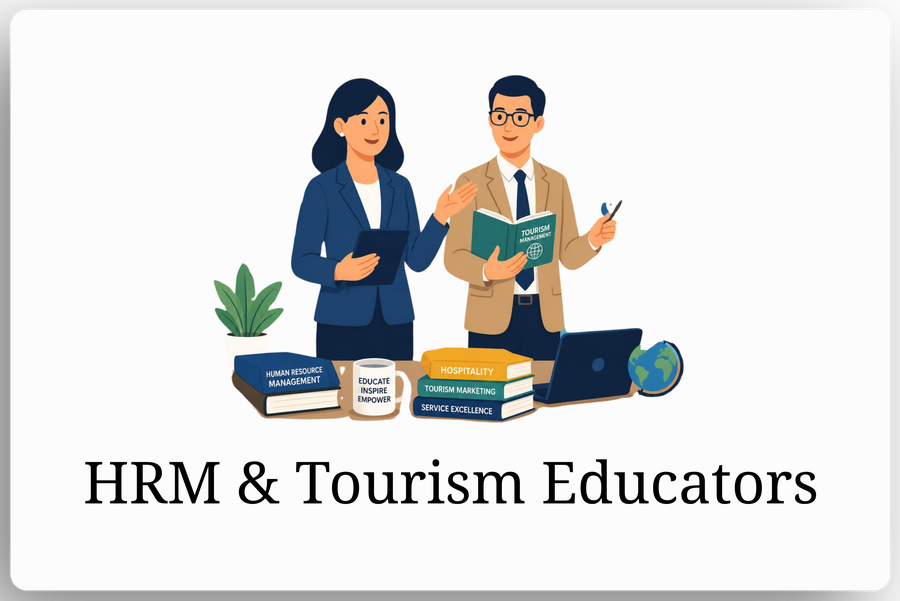
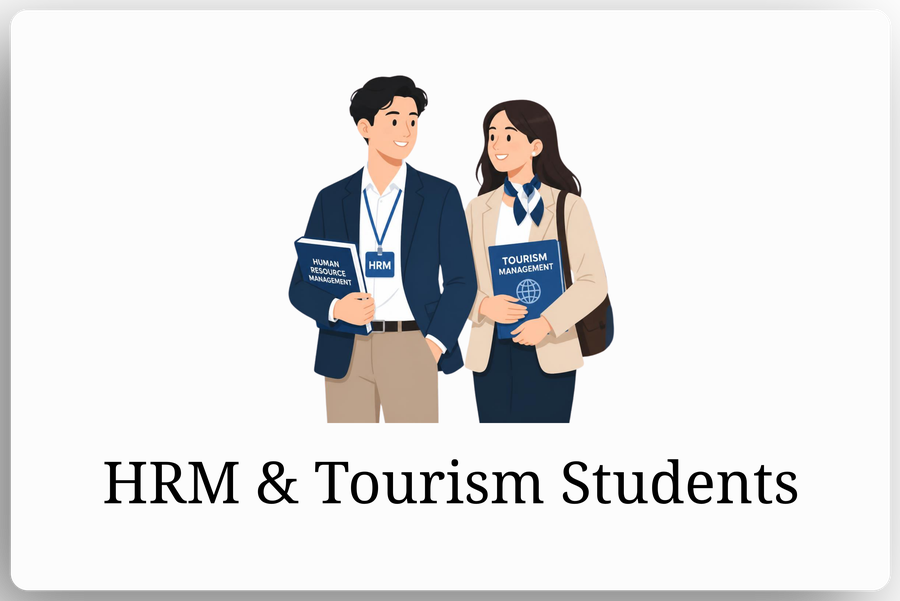

We bring together organizations committed to strengthening the Philippine tourism industry through knowledge, collaboration, innovation, and practical solutions.






Department of Tourism, Tourism Promotions Board, national tourism offices, and tourism policy agencies.
Provincial, city, and municipal tourism offices; destination management organizations; local disaster-risk offices; and destination councils.
Hotel chains, resorts, serviced residences, accommodation associations, property managers, and hospitality operations groups.
Restaurant groups, cafés, catering companies, food-service associations, hotel F&B operators, and culinary organizations.
Travel agencies, tour operators, destination management companies, tour guides, travel networks, and travel trade associations.
Theme parks, museums, cultural sites, entertainment venues, festivals, convention organizers, MICE companies, and event suppliers.
Airlines, airports, ferry operators, bus companies, rail operators, car rentals, transport associations, and mobility platforms.
Security agencies, private security associations, safety consultants, risk-management firms, emergency-preparedness groups, and crisis-response providers.
Hospitals, clinics, ambulance providers, emergency medical teams, search-and-rescue organizations, fire services, and first-aid training providers.
Reservation and payment platforms, cybersecurity firms, CCTV and surveillance providers, and smart-destination technology companies.
Hospitality and tourism schools, HRM programs, security and criminology departments, vocational institutions, trainers, educators, and student organizations.
Hotel and restaurant associations, tourism associations, travel trade groups, security associations, HR networks, business chambers, and professional societies.
Travel insurers, property insurers, brokers, banks, payment companies, risk advisers, business-continuity consultants, and enterprise resilience firms.
Equipment distributors, uniforms and protective-gear suppliers, emergency equipment providers, sanitation providers, and operational support vendors.
Regional tourism bodies, international hotel groups, global travel organizations, embassy or consular networks, and international security or resilience associations.
Tourism publications, hospitality media, business press, event media partners, and communications agencies focused on travel, safety, or industry development.

The Five A’s provide PROtecTOURS with a holistic framework for protecting the visitor journey—from the places people visit and how they get there, to where they stay, the services they depend on, and the experiences they undertake.
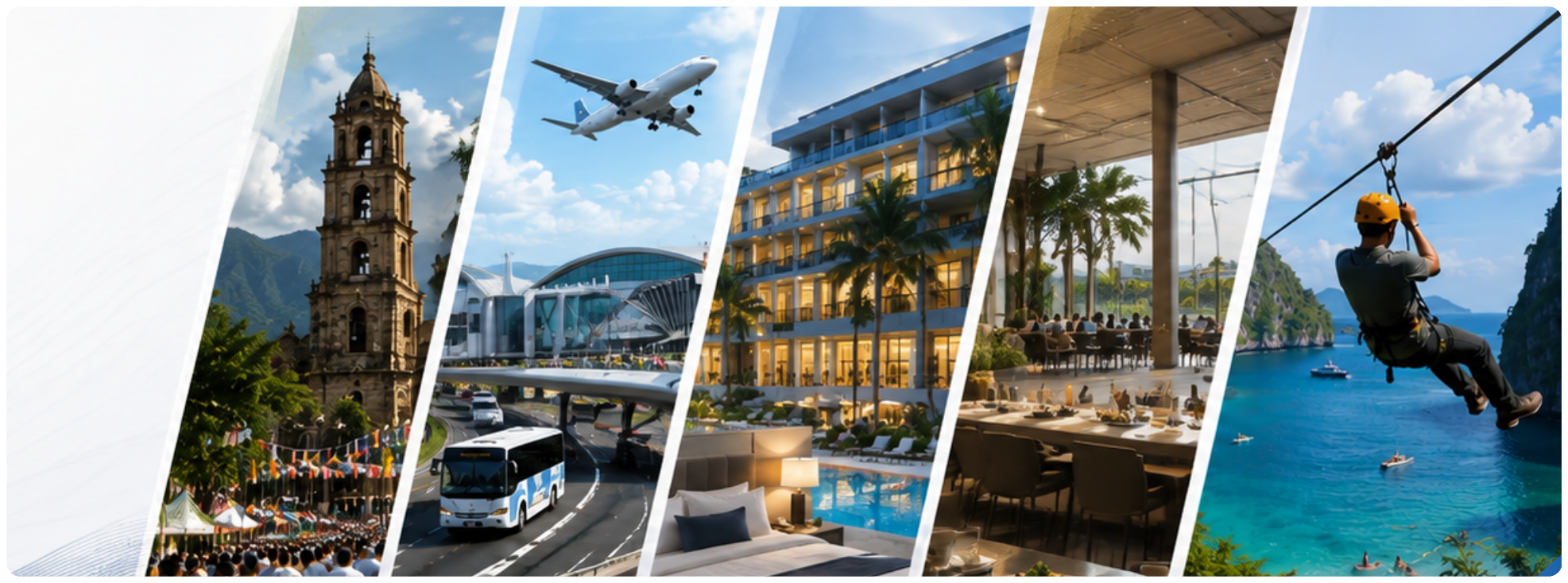
Connecting tourism and hospitality leaders, government stakeholders, security and safety professionals, educators, and industry experts to build a safer, more secure, and more resilient tourism ecosystem.
Select Morning, Afternoon, or Evening to view that part of the tentative PROtecTOURS program. Only one schedule is shown at a time for easier browsing.